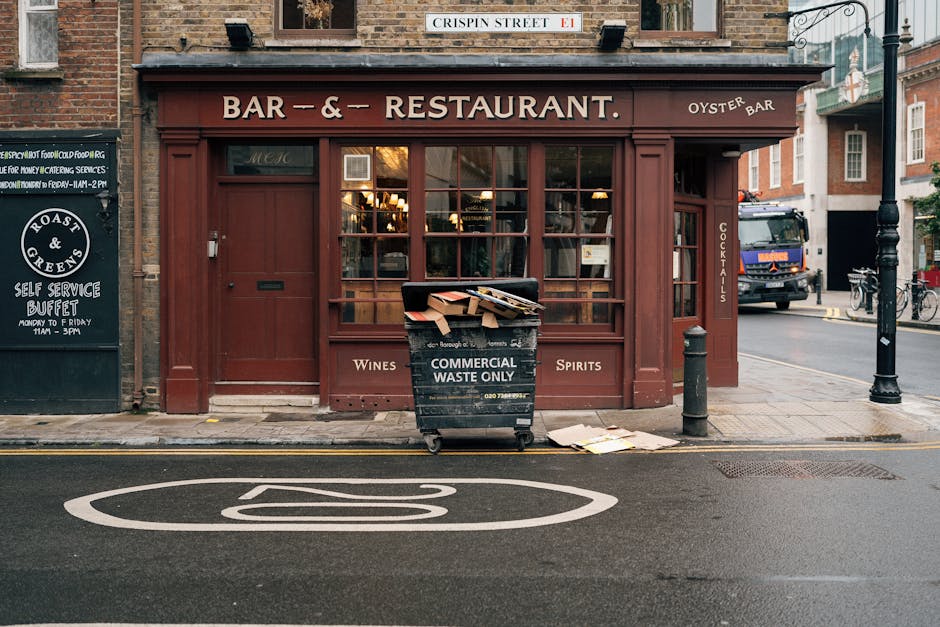
Small business rubbish clearance for Penge High Street shops
Running a shop on Penge High Street is busy enough without bins overflowing behind the till, stockroom clutter creeping into walkways, or old fittings hanging around long after they've done their job. Small business rubbish clearance for Penge High Street shops is really about keeping a commercial space safe, presentable, and workable without turning waste into a daily headache. Whether you're clearing packaging, broken shelving, end-of-line stock, or a tired backroom full of "we'll sort that later" items, the right approach saves time, reduces stress, and helps your shop stay open and professional.
In practice, the best clearance service does more than just remove rubbish. It gives you a plan: what can be taken, what needs separating, how access is handled, and how the job can be done with as little disruption as possible. That matters on a high street where footfall, neighbours, loading access, and tight schedules all shape how a clearance needs to happen. Let's make it straightforward.
Table of Contents
- Why it matters for High Street shops
- How the clearance process works
- Key benefits and practical advantages
- Who needs this and when it makes sense
- Step-by-step guidance
- Expert tips for better results
- Common mistakes to avoid
- Tools, resources and recommendations
- Law, compliance and best practice
- Options, methods and comparison
- Case study or real-world example
- Practical checklist
- Conclusion
- Frequently asked questions
Why Small business rubbish clearance for Penge High Street shops Matters
High street retail has a rhythm of its own. Deliveries arrive at awkward times, storage rooms fill up faster than anyone expects, and a "temporary" pile of cardboard somehow becomes a permanent feature. On a street like Penge High Street, where customers notice first impressions quickly, rubbish and clutter can affect far more than appearances. It can affect safety, workflow, staff morale, and even how confidently customers move through your space.
There's also a practical reality: many small shops simply do not have the room for long-term waste accumulation. A compact backroom, narrow staff corridor, or shared access route can make ordinary waste management awkward. And once waste starts blocking storage or fire exits, the problem stops being cosmetic and starts becoming operational. Nobody wants that awkward moment where you realise the stockroom looks more like a storage unit after a bad week.
For small businesses, good rubbish clearance can be the difference between a tidy, well-run premises and one that feels constantly half-finished. It supports stock rotation, makes cleaning easier, and helps staff work without stepping around old cardboard, broken fixtures, or packaging from recent deliveries.
Practical takeaway: if waste is getting in the way of trading, stock handling, cleaning, or customer movement, it's no longer just waste. It's a business operations issue.
That's why many shop owners look beyond a standard bin collection and use a dedicated commercial clearance service such as business waste removal when the volume, timing, or type of rubbish becomes harder to manage in-house.
How Small business rubbish clearance for Penge High Street shops Works
At its simplest, the process is a targeted collection of unwanted business waste from a shop, usually arranged around your opening hours, delivery times, or quieter periods. But the best clearances are a bit more organised than that. A good provider will usually want to understand what needs removing, how much there is, whether there are bulky items, and what access looks like at the premises.
For example, a newsagent might need old shelving, packaging, and damaged display items removed. A boutique may need rails, mannequins, boxes, and seasonal decor taken away after a refit. A cafe-style retailer could have broken furniture, storage waste, and a surprising amount of mixed packaging. Different waste, different handling. Simple, but important.
In a typical clearance, the team will arrive, assess access, remove the agreed items, and load them for sorting and disposal. If the job includes reusable items, they may be separated from general waste. If there is scrap wood, cardboard, furniture, or mixed commercial rubbish, it is usually sorted with recycling in mind where possible. That's one reason it helps to use a service that understands recycling and sustainability rather than just treating everything as a black sack problem.
Clear communication matters here. If you know there's a back entrance, a shared alley, or narrow steps, say so early. If your clearance needs to happen before opening, say that too. The smoother the briefing, the smoother the day. Honestly, that little bit of planning saves a lot of grumbling later.
Key Benefits and Practical Advantages
There are obvious benefits, and then there are the ones shop owners really appreciate after the fact. The obvious one is that the rubbish disappears. The less obvious ones are often more valuable.
- Better presentation: A cleaner shopfront and back-of-house area feels more professional and easier to manage.
- Improved safety: Fewer trip hazards, fewer blocked routes, and less stacked waste in tight spaces.
- More usable storage: A cleared stockroom gives you back room to work, store, and rotate goods properly.
- Faster turnaround during refits: When you need a quick refresh, waste removal keeps the project moving.
- Lower staff frustration: Nobody enjoys working around boxes, broken fittings, and "I'll deal with it later" piles.
- Better customer confidence: Even if rubbish is only in the back, customers often pick up on the overall feel of a premises.
One quiet benefit is momentum. Once the clutter goes, businesses tend to make better decisions about what stays and what goes. That sounds small, but it often leads to better stockroom discipline and less waste in the future. The space starts working for you again.
For larger clear-outs, you may also find it useful to compare general rubbish removal with more specific services such as office clearance or builders waste clearance if your shop has been refurbished or fitted out recently. The right type of removal can make a surprising difference to efficiency.
Who This Is For and When It Makes Sense
This kind of service is for small retailers, independents, takeaways with retail space, salons, charity shops, convenience stores, specialist boutiques, service counters, and any Penge High Street business that produces more rubbish than the daily bin routine can comfortably handle.
It makes sense in a few common situations:
- after a shop refit or redecoration
- when closing, relocating, or downsizing
- after a seasonal reset, such as post-Christmas or summer stock changeover
- when back-room storage has become overcrowded
- when broken furniture or tired fixtures are taking up space
- after a delivery-heavy period has left excess packaging behind
It's also relevant if you rent your unit and need to hand it back in a tidy condition. In those situations, the difference between "nearly clear" and "properly clear" can be frustratingly visible. A few leftover items can become a last-minute scramble, and nobody likes that on a Friday afternoon.
Some shops combine waste removal with furniture or fixture disposal, especially if they are replacing display units, counters, or old seating. In those cases, it may be worth looking at furniture disposal or furniture clearance where the items are bulky but still straightforward to remove.
Step-by-Step Guidance
If you want the process to run smoothly, it helps to think in stages rather than trying to solve everything on the day. The best clearances tend to be the ones where the prep was quietly done in advance.
- Walk through the premises. Identify what needs removing, including obvious waste and the awkward little bits people forget: broken hangers, damaged storage boxes, old signage, dead stock packaging, and worn display items.
- Separate waste types where practical. Cardboard, general rubbish, timber, metal fixtures, and reusable items are easier to manage when they're not all mixed together.
- Check access. Note staircases, narrow passages, loading restrictions, shutters, and any shared entry points.
- Choose a timing window. Early morning, after closing, or during a quieter trading period usually works best.
- Confirm what's included. Make sure bulky items, dismantling, and loading are clearly understood before the job begins.
- Prepare staff. Tell employees what will be moved, what needs to stay, and whether they should clear personal items from shelves or storage areas.
- Finish with a quick inspection. Check that the agreed waste has gone and that access routes are clean and usable.
That final walk-through matters more than people think. You'd be surprised how often one awkward corner gets overlooked because everyone is tired and just wants the day over with. Fair enough, but a 60-second check can save a second visit.
If your premises also have accumulated household-style clutter in an upper room, storage space, or staff area, some shop owners find that loft clearance or garage clearance services are useful when the storage problem is bigger than standard waste removal.
Expert Tips for Better Results
After enough commercial clearances, a few habits consistently make life easier. They're not glamorous, but they work.
- Photograph the waste before collection. This helps you confirm volume and avoid surprises on the day.
- Keep recyclable materials separate. Cardboard, clean wood, and metal often handle differently from mixed rubbish.
- Use one point of contact. A single staff member or manager should approve access and sign-off. Less confusion, less faff.
- Plan around deliveries. If your stock arrives in the morning, book removal for later in the day or after close.
- Think ahead to the next week. If the same clutter will rebuild quickly, adjust your waste routine as part of the clearance.
Here's a small but useful point: ask yourself whether you need a one-off clearance or a reset before a new routine. Because if the real issue is ongoing overstocking or poor storage habits, just removing the rubbish once won't solve the wider problem. It'll help, yes. But the clutter has a habit of coming back, almost smugly.
For shops with regular waste across several categories, a broader waste removal plan is often the cleaner long-term answer than repeatedly improvising. Simple answer, really.
Common Mistakes to Avoid
Most clearance problems come down to assumptions. The shop owner assumes the team knows what needs taking. The team assumes anything not mentioned can stay. And then someone finds a broken display cabinet still in the corner. It happens.
- Not separating fixtures from general waste: Bulky items can slow everything down if they're only mentioned at the last minute.
- Underestimating access issues: Tight stairways, loading restrictions, or shared entrances can change the whole plan.
- Leaving sorting until collection day: This usually creates avoidable delays and stress.
- Forgetting about trading hours: A clearance that blocks the shopfront during peak footfall is a nuisance, not a help.
- Choosing the wrong service type: Business waste, bulky furniture, and renovation debris are not always handled the same way.
- Not checking the end result: A quick sign-off prevents awkward "we thought that was included" conversations later.
One more thing: don't leave every decision to the person who is busiest on the day. They're usually the one with five other problems already. The best clearances are the ones where somebody has quietly done the thinking beforehand.
Tools, Resources and Recommendations
You do not need specialist equipment to prepare for a shop clearance, but a few practical tools make the job smoother.
- Marker pens and labels: Useful for marking keep, remove, donate, and recycle items.
- Heavy-duty sacks or boxes: Good for small mixed waste, packaging, and loose items.
- Handheld trolley or sack truck: Helpful for moving items to a collection point without repeated lifting.
- Basic measuring tape: Handy if you need to check whether a bulky cabinet or counter will fit through a doorway.
- Phone photos: A quick way to record what needs removing and brief your clearance provider accurately.
As for recommendations, start with clarity. Make a simple written list before the collection. It does not need to be fancy. A notebook page or a message to the team is enough. Then group items by type so the collection can be completed efficiently.
Where items are still in decent condition, it can also be worth asking whether they need disposal or just removal. For example, some furniture may be better handled as part of furniture clearance rather than mixed waste. That small distinction can save time and avoid throwing usable items into a general load by mistake.
If your priority is service reliability and clear process, it is sensible to review company information such as about us, health and safety policy, and insurance and safety. Those pages help set expectations before work begins.
Law, Compliance, Standards, or Best Practice
For small businesses, waste handling is not just a convenience issue. In the UK, commercial waste needs to be managed responsibly, and business owners should use a lawful, documented approach to disposal. You do not need to become a compliance expert overnight, but you do need to avoid casual habits like leaving waste outside because "someone will take it" or mixing different waste types without thinking through the consequences.
In practical terms, good compliance usually means:
- using an appropriately authorised waste carrier where required
- keeping waste separate where practical
- avoiding fly-tipping and uncontrolled disposal
- making sure waste is stored safely before collection
- ensuring staff understand what can and cannot be left for removal
Best practice also includes keeping the premises safe during clearance. That means clear walkways, no unstable piles, no blocked fire exits, and no loose materials left where customers or staff might trip. If your shop is on a busy street, you also need to think about public-facing risk. A box left in the wrong place during a rush period can become a nuisance very quickly. No drama, just common sense.
If a project includes heavier construction-like waste from a fit-out or refurb, builders waste clearance may be more appropriate than a general rubbish collection. Matching the service to the waste is a small decision with big practical benefits.
Where business owners are comparing service standards, it's sensible to check documentation such as terms and conditions, payment and security, and pricing and quotes. Clear terms reduce awkwardness later, which is always a win.
Options, Methods, and Comparison Table
Shop owners usually have a few choices when rubbish starts building up. Some are fine for small, simple jobs; others work better when the clearance is larger or more time-sensitive.
| Method | Best for | Pros | Limitations |
|---|---|---|---|
| Regular bin collection only | Very small, routine waste volumes | Simple, low effort | Not suitable for bulky items or one-off clear-outs |
| DIY disposal | Tiny loads and simple materials | Can feel cheaper up front | Time-consuming, labour-heavy, and easy to get wrong |
| Commercial rubbish clearance | Mixed waste, bulky items, and busy shop schedules | Efficient, convenient, organised | Requires planning and a proper brief |
| Specialist furniture or office removal | Fixtures, fittings, desks, counters, shelving | Better for larger reusable or bulky items | Needs correct service selection |
For most Penge High Street shops, the sweet spot is usually a commercial clearance service that can handle mixed loads sensibly and without making your team spend half a day lugging boxes around. The key is choosing the right method for the actual waste, not the waste you hoped you had.
Case Study or Real-World Example
Here's a realistic example. A small independent shop on a busy stretch of High Street has just finished a short refurbishment. The owner needs old display units removed, a pile of packaging cleared, and a backroom that has slowly filled with surplus stock boxes, broken hangers, and a couple of heavy shelves that no one wants to deal with.
Rather than leaving everything for staff to chip away at across several evenings, the owner books a clearance for first thing in the morning. Before the team arrives, items are grouped into rough categories: bulky furniture, packaging, and general rubbish. The rear access route is checked, the staff know what stays, and the till area is left clear.
The collection is quicker because the prep was done. The shop opens with a cleaner stockroom, easier movement behind the counter, and no awkward leftovers sitting in the corridor. The owner then changes the way packaging is broken down each week so the clutter does not rebuild quite so fast. Not flashy. Just sensible.
That is often how the best results happen in real life: not through a dramatic one-off fix, but through a tidy clearance plus a small change in routine.
Practical Checklist
Use this before arranging your shop clearance. It keeps things simple.
- Identify all items to be removed
- Separate bulky items from general waste
- Check access, doors, stairs, and loading points
- Choose a time that avoids peak customer activity
- Confirm who will approve the job on the day
- Remove personal or sensitive items from the area
- Photograph the waste if helpful
- Ask about recycling and sorting where relevant
- Review terms, safety information, and pricing details
- Do a final walk-through once the clearance is done
And if the clearance feels bigger than expected, that is fine. It happens all the time. Better to notice early than halfway through a loading plan. Much better, actually.
Get a free quote today and see how much you can save.
Conclusion
Small business rubbish clearance for Penge High Street shops is really about keeping your business clear, calm, and ready for daily trade. When waste is handled well, the whole shop feels easier to run. Staff move better, storage works better, customers see a more professional space, and you spend less time firefighting clutter that should never have become a problem in the first place.
The best results usually come from a simple mix of planning, the right type of removal, and a realistic look at what's actually building up behind the scenes. If you're facing a one-off clear-out or a recurring waste problem, treat it as part of how your business runs, not as an afterthought. That mindset alone goes a long way.
And if the back room has been bothering you for weeks, well, maybe it is time to sort it. Little jobs have a way of becoming big ones. Better to get ahead of it now and breathe a bit easier tomorrow.
Frequently Asked Questions
What counts as small business rubbish clearance for a shop?
It usually includes mixed commercial waste, packaging, broken fixtures, unwanted stock-related items, and bulky rubbish that is too much for routine bins to handle comfortably.
Can a clearance be arranged outside trading hours?
Yes, that is often the easiest option for busy shops. Early morning or after closing tends to reduce disruption and keeps the shopfront clearer for customers.
Do I need to separate cardboard, metal, and general waste first?
It helps, and in many cases it speeds up the job. Separation also makes recycling easier where materials are suitable for it.
What if my shop has bulky old shelving or counters?
Bulky fixtures should be mentioned in advance. They may need special handling, and in some cases furniture or office-style clearance is more suitable than general rubbish removal.
Is this service suitable for a shop refit or refurbishment?
Yes. If the waste includes materials from a refit, a more specific service such as builders waste clearance may be the better fit, depending on what needs taking away.
How do I prepare a small shop for rubbish collection?
Walk through the premises, group waste by type, clear access routes, remove personal items, and make sure someone is available to confirm what goes and what stays.
What should I ask before booking a rubbish clearance?
Ask what waste is accepted, how access will be handled, whether bulky items are included, what the timing looks like, and how pricing is confirmed.
Can rubbish clearance help with storage problems in the stockroom?
Absolutely. A proper clearance often frees up enough space to improve stock rotation, cleaning, and general day-to-day workflow. It can make a cramped stockroom feel usable again.
What are the most common mistakes shop owners make?
The biggest mistakes are underestimating volume, forgetting about access issues, mixing waste types without a plan, and failing to check the final area once the job is done.
How do I know if I need business waste removal rather than a one-off clear-out?
If rubbish is building up regularly rather than just after a single event, a structured business waste removal arrangement may make more sense than repeated ad hoc clearances.
Should I keep records of the clearance?
Yes, that is sensible. Keep notes on what was removed, when it happened, and any relevant paperwork or invoice details. It helps with internal tracking and future planning.
Where can I find more information about service standards and policies?
You can review pages such as about us, health and safety policy, and recycling and sustainability to understand approach, safety, and environmental priorities.